Difference-in-Differences and Staggered Adoption Design (Book Chapter)
Abstract
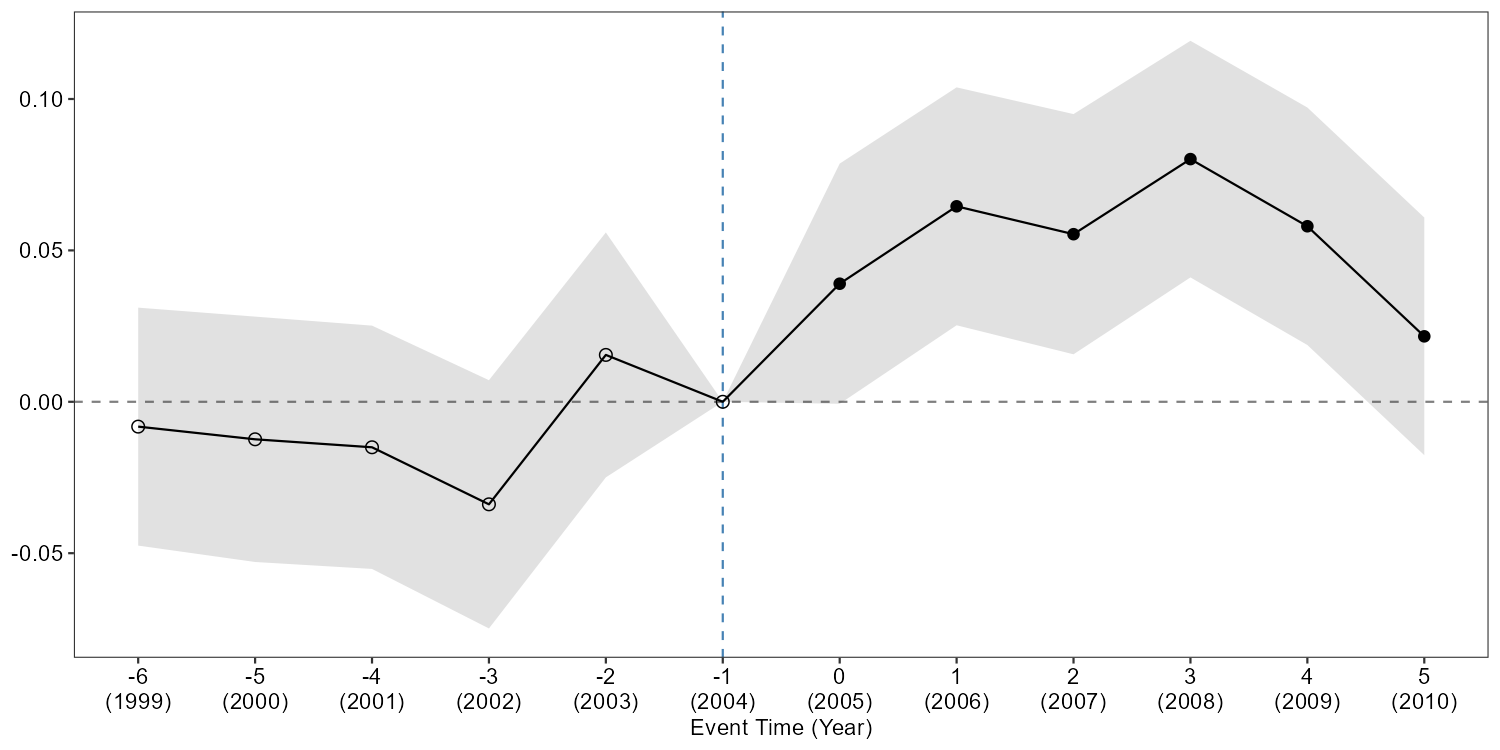
This book chapter introduces difference-in-differences designs as a core tool for causal inference and explains why standard two-way fixed effects estimators can be misleading under staggered treatment timing or heterogeneous treatment effects. It develops the classic two-group, two-period framework and then extends the discussion to two modern alternatives: stacked difference-in-differences and imputation-based estimators. The chapter emphasizes the importance of separating estimation from aggregation across units and time, providing applied researchers with a framework for implementing credible, interpretable, and robust DID analyses.
Type