Blades of Glory? The Impact of Wind Farms on Crime
Abstract
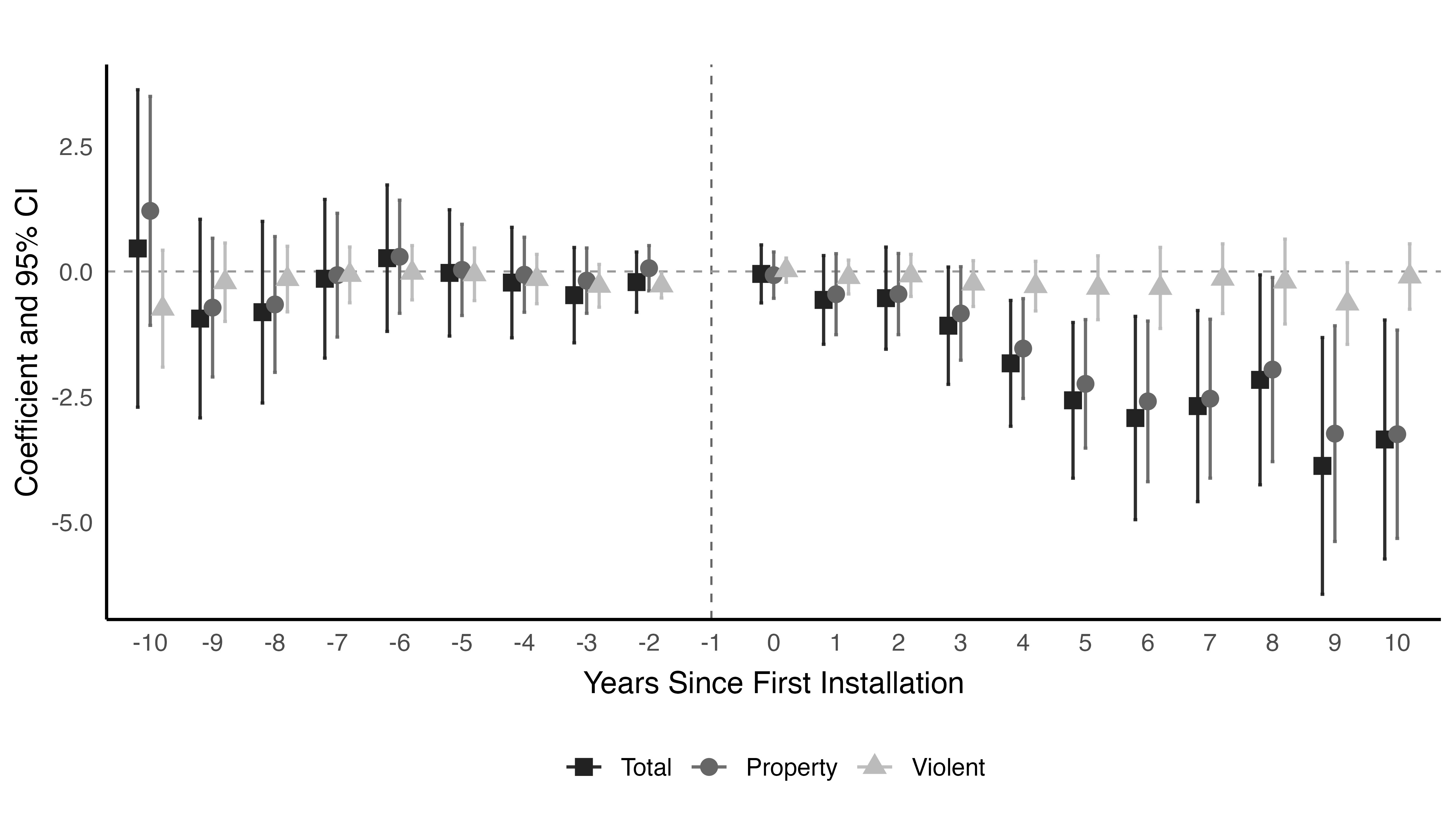
This paper estimates the causal effect of commercial wind turbine installations on local crime rates in the United States. Using 1995-2023 Uniform Crime Reporting data and a staggered difference-in-differences design, we examine effects across criminal offenses and explore mechanisms through local government revenues and expenditures, population dynamics, and migration. We find that county-level crime rates decline about three years after wind turbine installation, while local revenues and expenditures increase, suggesting that wind energy development generates social externalities relevant for renewable infrastructure siting policy.
Type